A store shoppers can compare.
RealCBDOils sells CBD oils, capsules, edibles, topicals and pet products to customers across Canada. We developed the website for the client, built so shoppers can understand the range, compare products and order with confidence.
- ProjectRealCBDOils
- TypeClient e-commerce store
- PlatformWordPress and WooCommerce
- Live siterealcbdoils.com (opens in a new tab)
The challenge
Selling CBD online in Canada comes with constraints most store templates ignore.
Shoppers want to compare strengths and formats before they trust a brand. Payment options for the category are often limited, so the ordering process has to be explained clearly. And product content has to be informative without drifting into claims the category can’t make.
The work
We developed the store on WordPress and WooCommerce. The finished site includes:
- A WordPress and WooCommerce store with the catalog organized into five clear categories: oils, capsules, edibles, topicals and pet CBD.
- Product pages structured so type, format and strength are easy to compare across the range.
- An FAQ with a step-by-step ordering guide that explains Interac e-Transfer payment.
- Educational content, including a “How CBD helps” page and a blog for ongoing articles.
- Shipping and delivery, returns and refunds, privacy and terms pages, all linked from the footer.
- On-page SEO foundations: a descriptive title and meta description, Open Graph and social sharing images, a Canadian locale and an indexable category structure.
Why the structure matters
Category pages are usually the strongest search landing pages in a store, because they match how people start shopping: “CBD capsules,” not a specific product name. Giving each product type its own category creates a clear landing page for each of those searches and a logical path from there to individual products.
The site, top to bottom
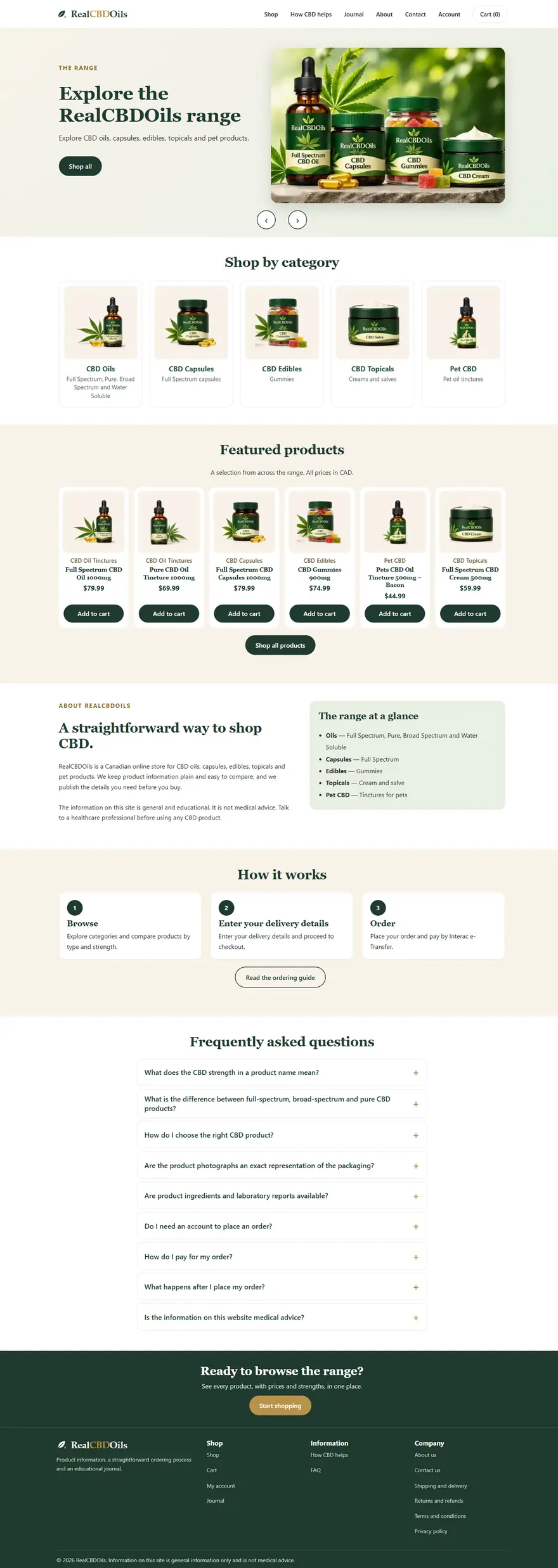
Screenshot of the live homepage, captured November 2026. Scroll inside the frame to view the full page.
What it demonstrates
E-commerce development
A complete WooCommerce store with catalog, cart, checkout, account and policy pages.
Catalog architecture
Categories that match how customers search and shop, with a clear path from category to product.
Buyer information in a regulated category
A structure that puts educational, ordering and policy information in front of buyers before checkout.
On-page SEO
Titles, meta descriptions, social sharing and locale settings in place on the live site.